Agentic AI · Edge Computing
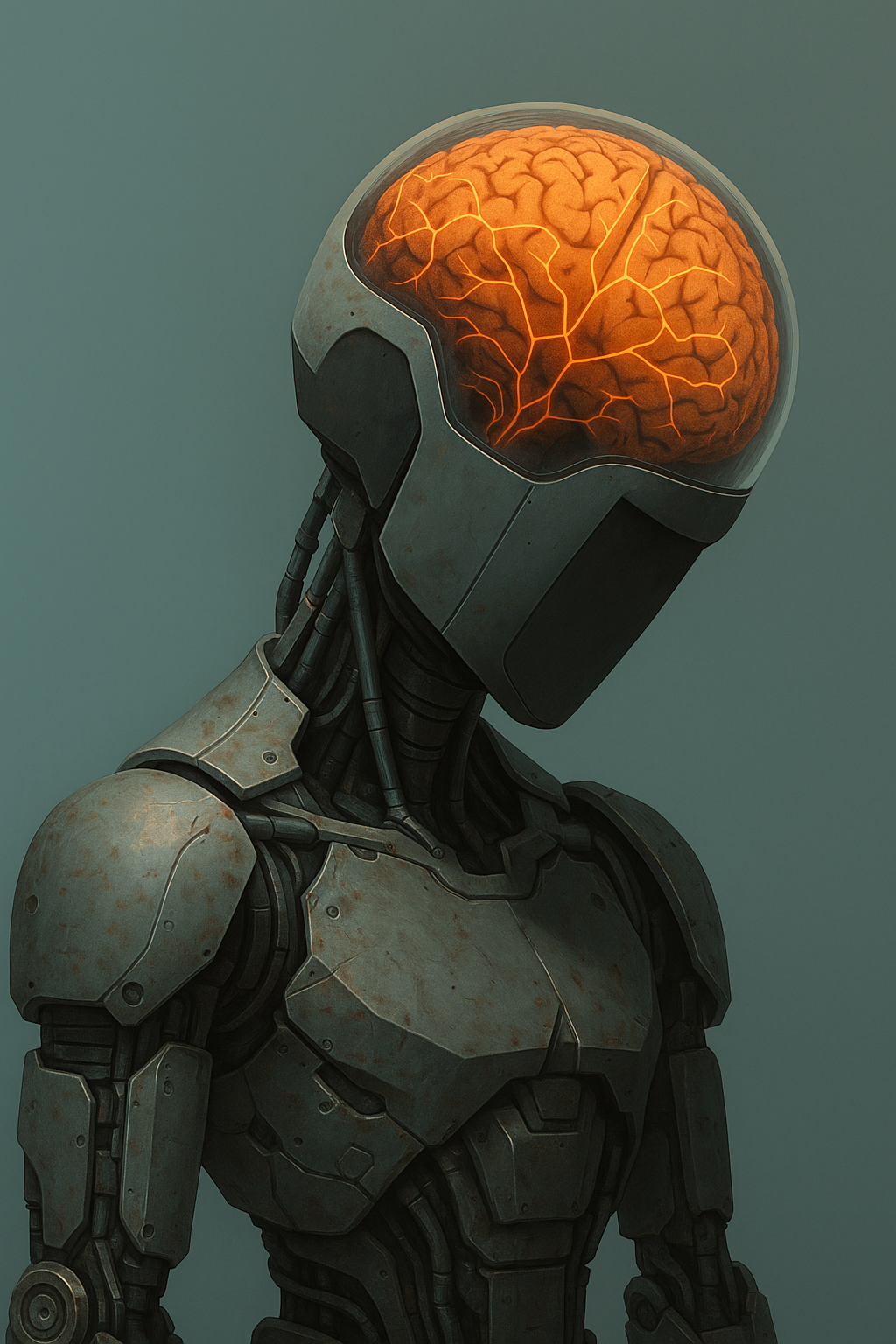
Your AI agent needs a body.
Give it one at the edge.
By Peila LTD
Edge Hardware · Agentic AI
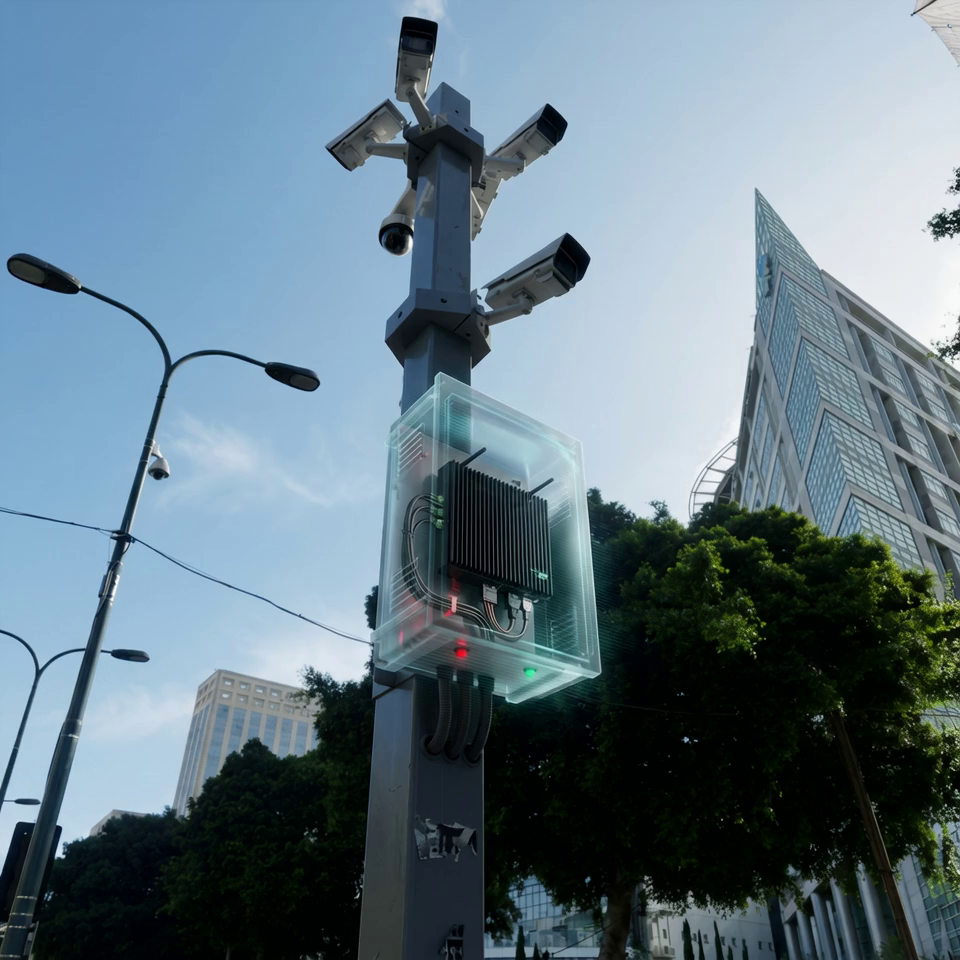
AI agents are no longer confined to the cloud. They're taking action in the physical world — on factory floors, in warehouses, aboard vehicles, inside server rooms. But an agent is only as capable as the hardware it runs on. At Peila, we put the right compute at the edge so your agents can act — reliably, in real time, wherever they're deployed.
What does an "agentic AI at the edge" actually mean?
Think of an AI agent as a decision-maker in a loop: it perceives its environment, reasons about what to do, takes an action, and observes the result. When that loop lives in the cloud, every perception and every action crosses a network. Latency climbs. Bandwidth costs mount. And when connectivity drops — the agent goes blind.
Edge AI agents move that loop onto local hardware, right next to the sensors, cameras, PLCs, and actuators they control. The result is a faster, more resilient, and often more private system — one that keeps working even when the internet doesn't.
One simple example to make it concrete: a smart warehouse runs an AI agent that monitors a conveyor belt via a camera, detects anomalies in real time, and signals a controller to stop the belt before a jam damages equipment. That entire perception-decision-action loop must complete in under 200ms. A cloud round-trip takes 80–300ms before any inference happens. The only viable answer is edge compute.
A concrete use case: the AI-powered quality inspector
This is one of the most approachable entry points into agentic edge AI — and a great example of how quickly a proof of concept becomes a production system.
Use case spotlight
Automated visual quality inspection on a production line
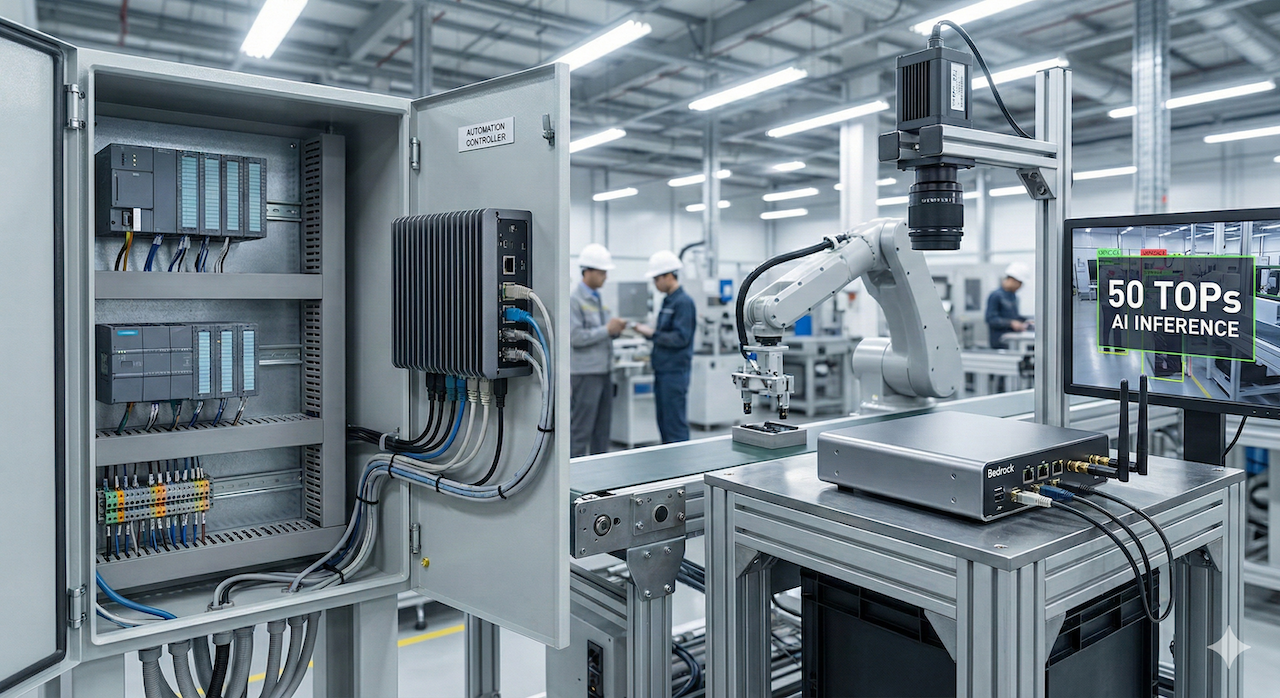
A production line runs at 200 units per hour. A camera mounted above the belt captures each unit as it passes. An AI agent running locally on an edge PC receives each frame, runs a vision model to detect defects (scratches, misalignments, missing components), and immediately signals a rejection arm — all within a single conveyor cycle.
No cloud. No 4G dependency. No sensitive product images leaving the facility.
The agent's loop looks like this:
- Camera captures a frame and delivers it to the local edge PC over GigE or USB3.
- The agent pre-processes the frame and runs inference using an NVIDIA GPU or NPU on-device.
- Defect detected? The agent calls a tool — an API endpoint on the local PLC — to activate the reject mechanism.
- The agent logs the event, updates a local dashboard, and optionally batches telemetry to the cloud for later analysis.
- The loop repeats for the next unit, within milliseconds.
This is just one concept out of dozens. The same pattern applies to predictive maintenance, autonomous inventory scanning, drone telemetry processing, network anomaly detection, and much more.
Which hardware fits your agent?
Not every use case needs an NVIDIA GPU. Not every budget can absorb one either. Peila's portfolio spans the full spectrum — from heavyweight AI accelerators to power-sipping ARM devices — so you can right-size compute for your specific requirements.
GPU / AI Acceleration
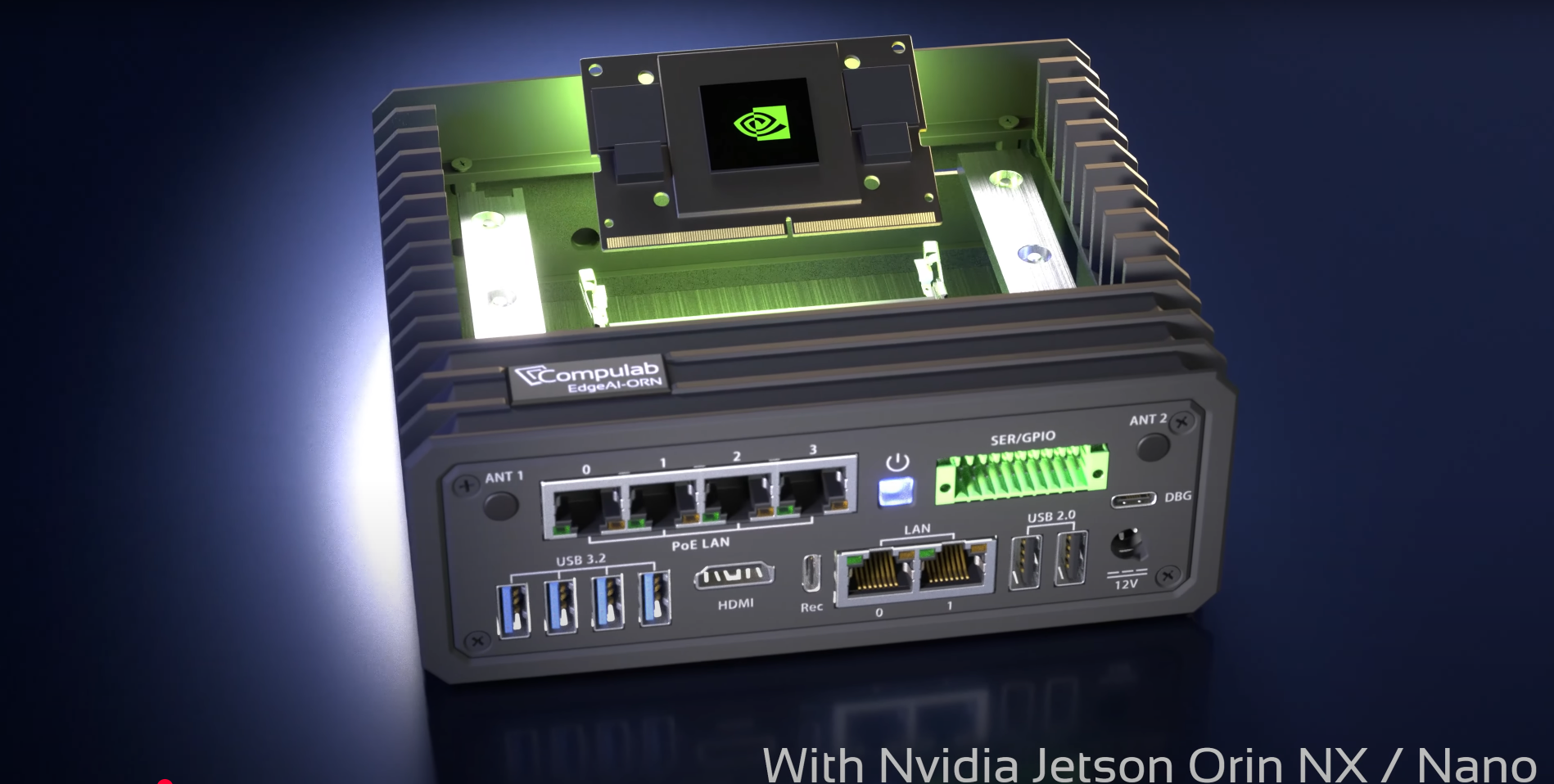
Compulab Rugged (NVIDIA)
Ruggedized, fanless edge PC with NVIDIA compute. Built for demanding vision inference, real-time AI, and harsh environments.
GPU / AI Acceleration
SolidRun RAI300
AMD Ryzen AI 9 HX 370 with XDNA 2 NPU and RDNA 3.5 iGPU — a compact powerhouse for agentic inference at the edge.
Mid-Range Industrial
Tensor I22
Configurable fanless industrial PC. Customizable I/O and compute profile — ideal for automation agents with moderate AI workloads.
Mid-Range Industrial
Bedrock R8000
8-core AMD Ryzen Phoenix with Radeon GPU. High-performance fanless design for agents that need serious local horsepower.
Lightweight / Celeron
Fitlet3 & Fitlet2
Ultra-compact fanless micro PCs on Intel Celeron / Apollo Lake. Perfect for lightweight agents: data collection, monitoring, edge gateways.
ARM / IoT
IOT-Gate (ARM)
Energy-efficient ARM-based IoT gateway. Ideal for always-on agents at very low power budgets — sensor aggregation, MQTT bridging, edge inference at scale.
Matching the right device to your agent's inference load, connectivity requirements, environmental constraints, and power envelope is where the real engineering happens. That's exactly the conversation we love to have.
Why Peila?
Since 1988, we have been helping engineering teams turn requirements into running systems. We don't just sell hardware — we help you select it, configure it, and integrate it. Our clients build drone controllers, digital twin devices, remote vision analytics tools, autonomous inspection systems, and more.
If you're designing an agentic AI system and wondering where the compute should live, what form factor fits, or how to handle latency and power constraints — come talk to us. We'll walk through your use case and help you pick the right device from day one.
Ready to give your AI agent a body?
Browse our product catalog or reach out for a personalized hardware consultation. We'll help you find the right edge compute for your exact use case and requirements.
Explore products ↗





.png)


.png)


