
A Body for the Agent: How the Rakia i-30 Runs Autonomous AI at the Edge
The Rakia i-30 AI Agent Edition is a fanless, always-on computer built to put autonomous software to work in the physical world.
For the last two years, AI agents have lived almost entirely inside chat windows. You type, they answer. But the next phase is already here: agents that watch a production line, manage a building, triage camera feeds, talk to machines, and act on what they see, continuously and without a human prompting each step. The moment an agent has to do something in the real world, a hard question appears. Where does it actually run?
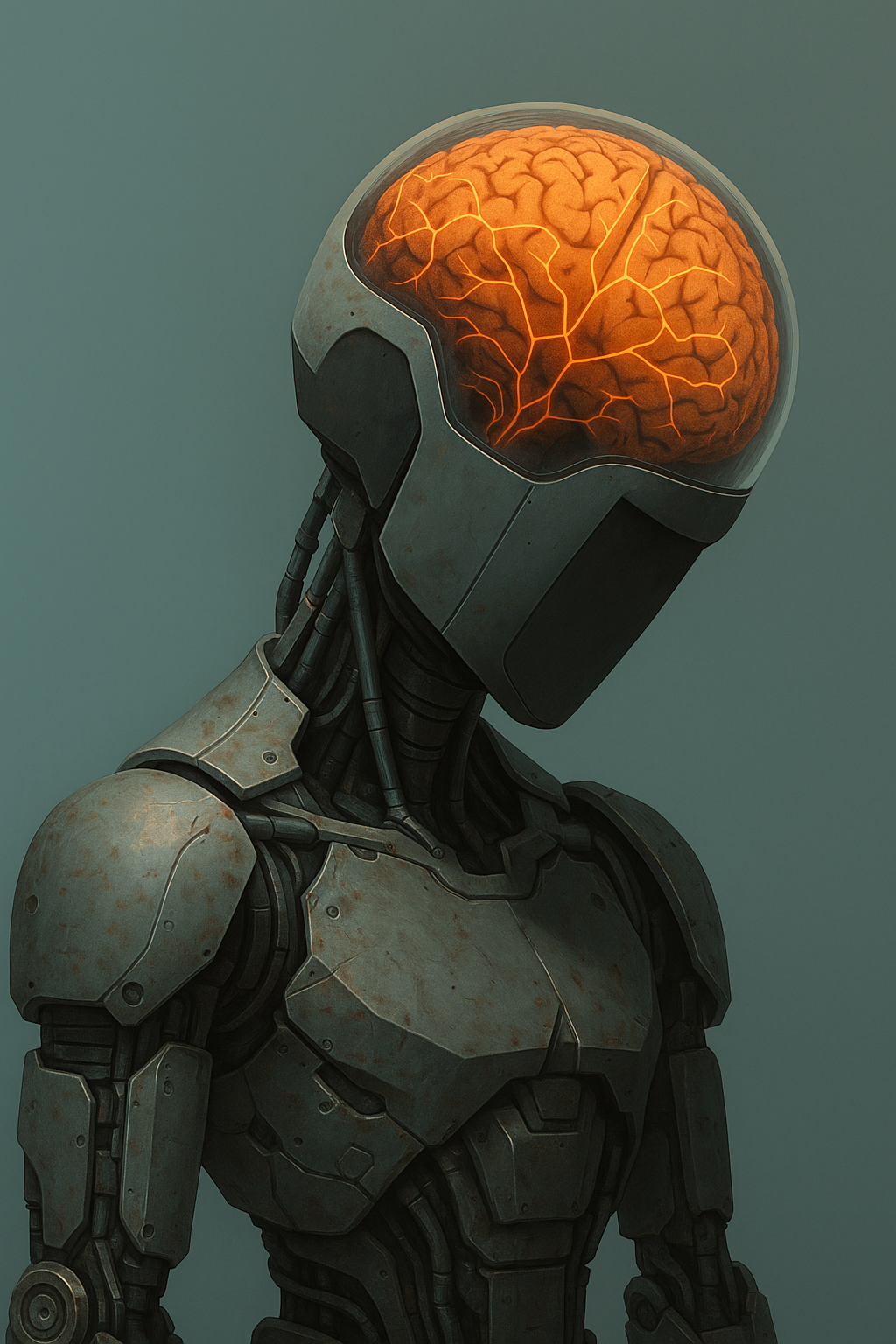
A cloud instance is the wrong answer for a surprising number of real deployments. It is dependent on a network link that can drop, it sends sensitive data off-site, it adds latency to every decision, and it keeps billing whether the agent is busy or idle. An agent that is supposed to run a factory cell or a retail floor needs somewhere local, private, and permanently on. It needs a body.
That is exactly what the Rakia i-30 was built to be.
Why an agent needs a body at the edge
An autonomous agent is only useful if it is actually present. Four things matter once you move from a demo to a deployment.
It has to be persistent. An agent that supervises equipment or responds to events cannot clock off. It runs 24 hours a day, 7 days a week, for years, often in a cabinet nobody opens.
It has to be local. The data an agent reasons over, camera frames, machine telemetry, customer activity, is frequently the data you least want leaving the building. Processing it on-site keeps it private and compliant by default.
It has to be fast. A round trip to a distant data center is fine for a chatbot and unacceptable for an agent that has to react to something happening in front of it right now.
And it has to be independent. The whole point of edge autonomy is that the agent keeps working when the internet does not. The compute has to sit where the work is.
Meeting all four means putting real, current-generation compute into a box that can survive the physical world. That combination is harder than it sounds, and it is where the Rakia i-30 earns its place.
Built to run, and to keep running
The Rakia i-30 is a fanless embedded computer, and its specification reads like a list of answers to the problems above.
Current-generation compute, with headroom. The Rakia i-30 runs Intel's 13th Gen Raptor Lake-U processors, the Core i7-1365UE or i5-1335UE, with 10 cores (2 performance plus 8 efficient) and 12 threads, boosting up to 4.9 GHz. Paired with up to 32GB of fast DDR5 memory, that is enough to do several things at once: run the agent's orchestration logic, perform local inference on the integrated Intel graphics through frameworks like OpenVINO, and handle the application around it, all on the same unit. This is a genuine compute platform, not a thin gateway.
Fanless, and built for 24/7. The entire chassis cools by convection through a finned metal body with no fans and no moving parts. That removes the single most common cause of field failure and lets the unit run continuously in places a normal PC would not survive. It is rated from -40°C to +60°C at full CPU load and up to 95% humidity, and it carries CE and FCC Class A certification. An agent that never sleeps needs hardware that never stops, and this is hardware designed to be left alone for years.
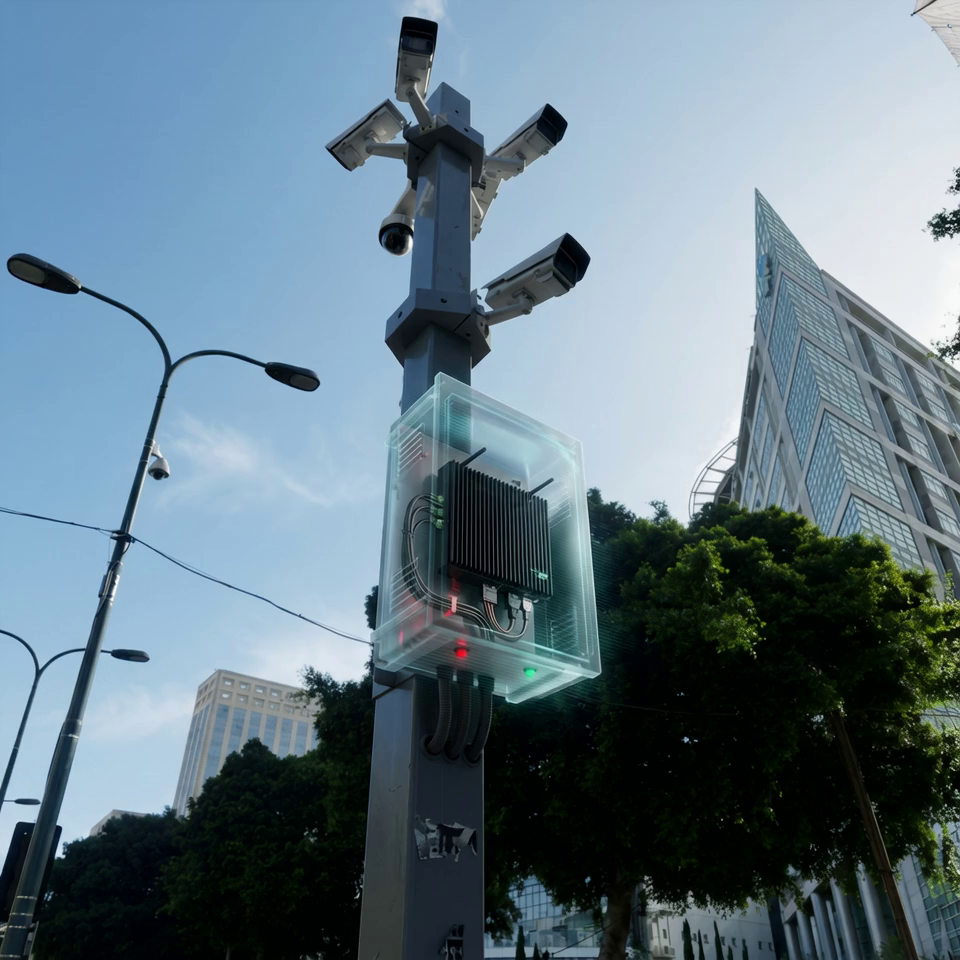
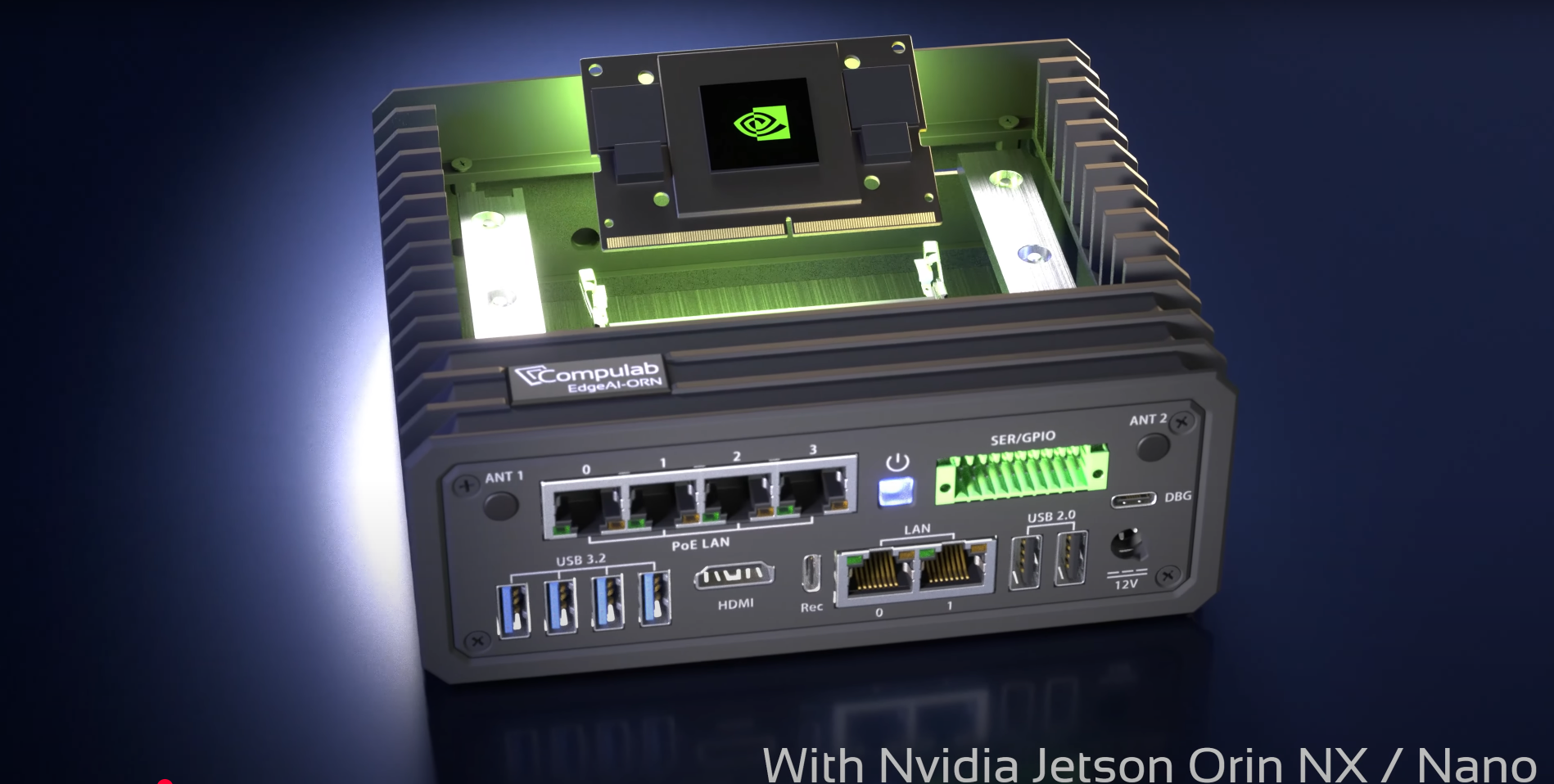
Networked for the real world. The Rakia i-30 carries four independent Intel 2.5GbE ports. That lets a single unit pull in multiple camera streams, sensor networks, or machine connections at once and act as the local hub that an agent reasons over. A Nano SIM slot plus optional 4G/5G and Wi-Fi 6 with Bluetooth modules mean it stays connected on sites where wired networking is impractical.
Wired to the machines around it. Autonomy means acting, not just observing. The Rakia i-30 offers optional RS-232/422/485 serial ports, 4 digital inputs and 4 digital outputs of GPIO, an HDMI output, and up to five USB ports, with an optional PoE module to power cameras directly. The same unit that interprets a situation can also trigger a relay, drive a sign, or talk to a PLC. Dual M.2 slots and support for NVMe and 2.5-inch SATA storage give it fast local storage for models, logs, and data.
Secure and self-recovering. Unattended hardware has to look after itself. The Rakia i-30 is built on a board with TPM 2.0 and AMI UEFI BIOS for a secured boot chain, and a hardware watchdog that can automatically restart the system if software ever hangs, so an agent recovers on its own without a site visit. It runs standard Windows 10/11 IoT, Ubuntu 22.04+, or Fedora, so your existing stack drops straight on.
Flexible power and mounting. A wide 9 to 36V DC input lets it run from almost any supply, including vehicle and battery systems, and at 1.25 kg and 141 x 111 x 72 mm with VESA, DIN-rail, or wall mounting, it fits inside a machine, a cabinet, a vehicle, or a wall bracket wherever the work happens.
The AI Agent Edition, ready to go
For teams that want to skip the configuration step, the Rakia i-30 comes in a dedicated AI Agent Edition: an Intel Core i5-1335UE with 16GB of DDR5 and a 512GB NVMe SSD, fanless, and specified for 24/7 operation. It arrives ready to host agent frameworks, local model inference, automation logic, and retrieval pipelines on-premise, so your software has a permanent, private home from day one.
Where it goes to work
Because it pairs real compute with industrial durability, the same platform fits a wide range of autonomous roles:
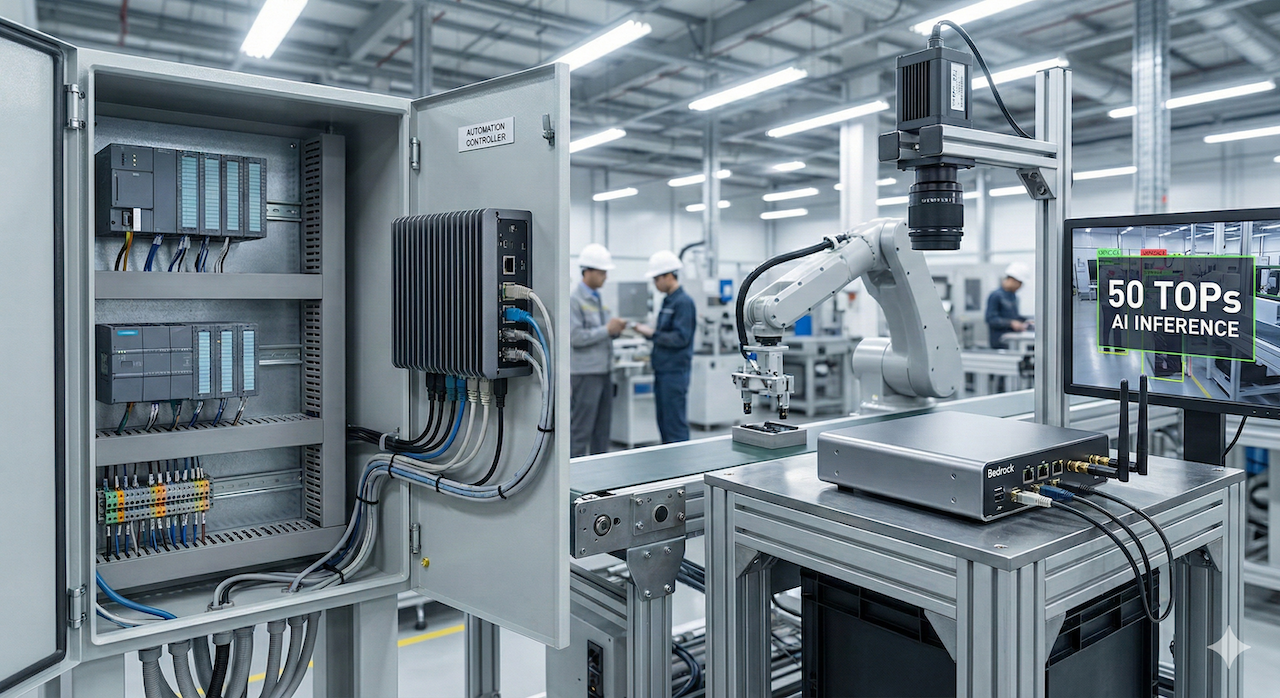
Industrial automation, where an agent supervises a cell, reads sensors and controllers over serial and GPIO, and acts in real time.
On-premise AI assistants, running private inference and retrieval over internal documents and data without anything leaving the building.
Machine vision, aggregating several camera feeds over 2.5GbE and running detection and quality-inspection models on the integrated graphics.
Edge networking and gateways, using the four network ports to route, segment, and secure local traffic.
Retail, kiosk, and building management, where an always-on local brain coordinates devices, screens, and sensors on site.
Our role
An AI agent is only as dependable as the hardware it lives on. That is what we do at Peila: we architect rugged, fanless computing platforms for the edge and configure each one, processor, memory, storage, networking, I/O, and enclosure, for the exact job it has to do. The Rakia i-30 is our answer for teams moving agents out of the browser and into the world, and it is built to run that way for years.
If you are putting autonomous software into the field and need a body for it, we would be glad to help you spec the right platform.
Explore the Rakia i-30: https://www.peila-international.com/productsTalk to us: https://www.peila-international.com/contact-us
Peila Ltd architects rugged, fanless PCs tailored for the edge, driving ideas from concept to reality. Learn more at peila-international.com.
.png)




.png)


.png)


